


Are Private Homes in a Continuing Care Retirement Community (CCRC) a Good Idea?
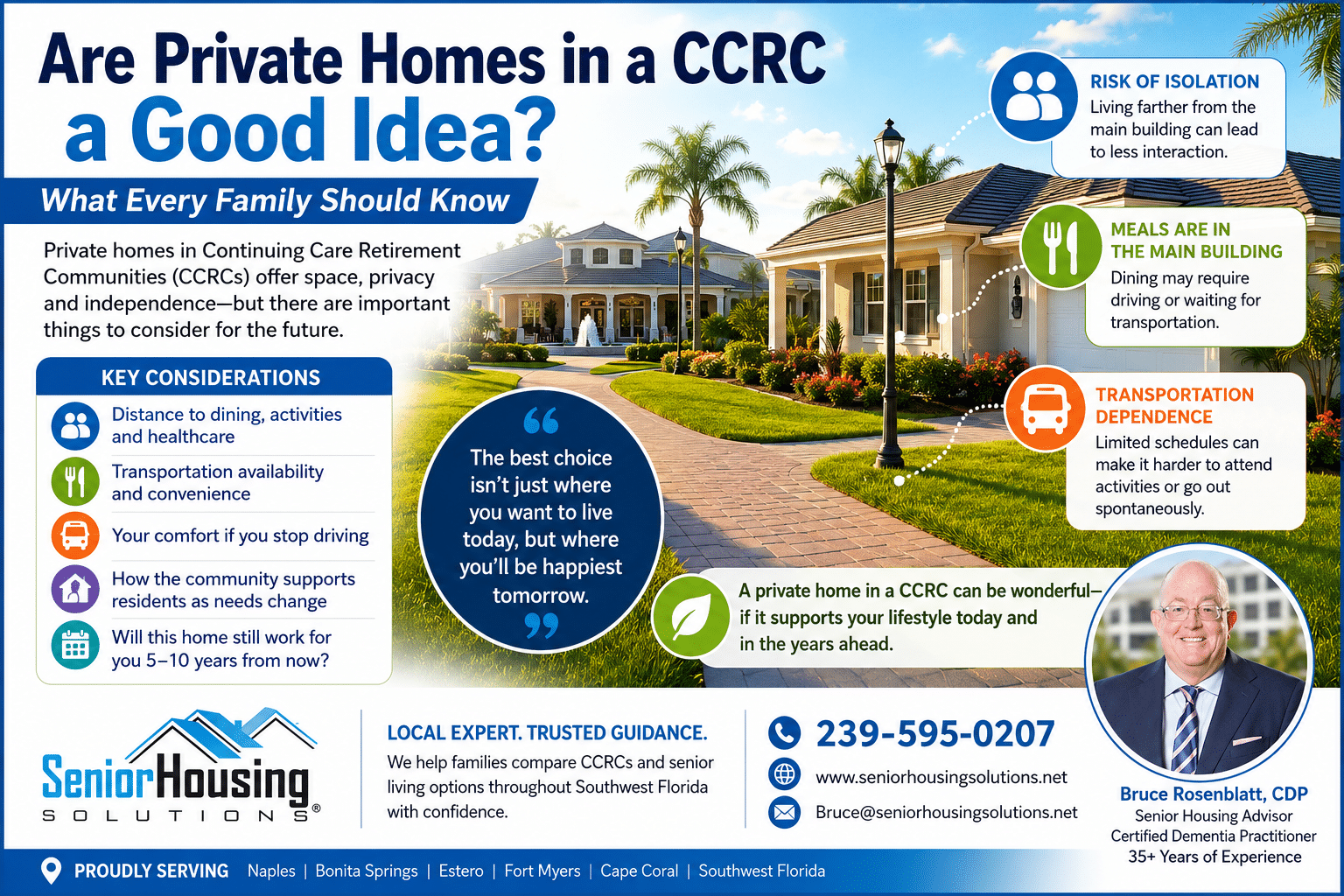
What Every Family Should Know Before Choosing a Cottage or Villa
When many people tour a Continuing Care Retirement Community (CCRC)—also known as a Life Plan Community—they're immediately drawn to the beautiful private cottages, villas, and single-family homes. They offer privacy, extra space, attached garages, and a neighborhood feel that closely resembles traditional homeownership.
But are they the best choice for your future?
As a Senior Housing Advisor with more than 35 years of experience, I've helped hundreds of families evaluate CCRCs throughout Southwest Florida. While private homes can be an excellent option for some, they also present challenges that many people don't consider until years later.
Here's what you should know before making this important decision.
The Appeal of Private Homes
There's no denying the advantages.
Private homes within a CCRC typically offer:
- Spacious floor plans
- Greater privacy
- Attached garages
- Outdoor patios or lanais
- Beautiful landscaping
- A true residential neighborhood feel
- Maintenance-free lawn care and exterior upkeep
For active retirees, this lifestyle can be very attractive. Residents enjoy the comfort of a private home while knowing higher levels of care—assisted living, memory care, and skilled nursing—are available if their needs change.
However, the decision shouldn't be based solely on how the home feels today.
Think About Life Five to Ten Years From Now
One of the biggest mistakes I see families make is choosing the largest or nicest home without considering how aging may affect daily life.
Ask yourself:
"Will this home still be convenient if I no longer drive or have mobility challenges?"
That question often changes everything.
The Hidden Challenges of Private Homes in a CCRC
1. Social Isolation Can Become a Real Concern
Many cottages and villas are located away from the community's main building.
While this creates privacy, it can also reduce spontaneous interactions with neighbors.
As mobility declines, many residents begin skipping activities because getting there simply becomes more difficult.
Isolation is one of the greatest risks to healthy aging. Regular social engagement has been linked to improved emotional well-being, better cognitive health, and a higher quality of life.
2. Dining May Require More Effort Than Expected
Most CCRCs have their primary dining venues inside the clubhouse or main community building.
Residents living in detached homes may need to:
- Walk long distances
- Drive to dinner
- Wait for scheduled transportation
- Avoid meals during bad weather
Over time, many residents begin eating at home more often, missing both the meal and the social experience that comes with it.
3. Transportation Can Limit Independence
Initially, most residents drive.
Eventually, many stop driving due to vision changes, slower reflexes, or personal choice.
If transportation within the community operates only on scheduled routes, spontaneous trips to lunch, fitness classes, or social events become more difficult.
Before choosing a private home, ask:
- Is transportation available all day?
- Is golf cart service provided?
- Can residents request rides?
- How easy is it to reach the clubhouse?
4. Activities Are Usually in the Main Building
Fitness classes.
Educational lectures.
Live entertainment.
Religious services.
Card games.
Movie nights.
Most community activities occur in one central location.
The farther you live from these amenities, the less likely you may be to participate regularly—especially as mobility changes.
Convenience often determines participation.
5. Emergency Response May Take Longer
Although CCRCs have emergency response systems, detached homes are naturally farther from staff than apartments located within the main building.
Response protocols vary by community, making it important to ask how emergency calls are handled.
6. Larger Homes Can Become More Difficult to Manage
Even with exterior maintenance included, residents may still be responsible for:
- Interior maintenance
- Appliance replacement
- HVAC systems
- Plumbing repairs
- Home organization
What feels comfortable at age 70 may feel overwhelming at age 85.
Apartment vs. Cottage: Which Is Better?
There isn't one right answer.
A private home may be ideal if you:
- Are very active
- Enjoy entertaining
- Want additional space
- Expect to live independently for many years
An apartment closer to the clubhouse may be better if you value:
- Daily social interaction
- Easy access to dining
- Short walks to activities
- Convenience without transportation concerns
- Reduced isolation
Many residents eventually discover that proximity to people is more valuable than extra square footage.
Questions to Ask Before Choosing a Private Home
Before signing a contract, ask:
- How far is the home from dining and activities?
- Is transportation available throughout the day?
- What happens if I stop driving?
- Is there covered access during rain?
- How often do residents relocate from cottages to apartments?
- What maintenance responsibilities remain mine?
- What healthcare services are included in my CCRC contract?
My Advice as a Senior Housing Advisor
After more than three decades in senior housing, I've learned that choosing a CCRC isn't just about selecting a beautiful home.
It's about choosing the lifestyle that will serve you best as you age.
When touring a community, don't simply ask:
"Could I live here today?"
Instead ask:
"Will this still work for me ten years from now?"
The answer may lead you to a different—and ultimately better—decision.
Need Help Comparing CCRCs in Southwest Florida?
Every Continuing Care Retirement Community has different contracts, healthcare benefits, entrance fees, refund policies, and residential options.
At Senior Housing Solutions, we help families compare communities objectively so they can make informed decisions with confidence. We also assist with scheduling tours, evaluating contracts, comparing costs, and understanding the long-term advantages and disadvantages of each option.
If you're considering a CCRC in Naples, Bonita Springs, Estero, Fort Myers, or anywhere in Southwest Florida, we're here to help.
Contact Bruce Rosenblatt, CDP
Senior Housing Solutions – Assisted Living Advisors
📞 239-595-0207
🌐 www.seniorhousingsolutions.net